Timber doors can be secure when the complete doorset is properly specified, fitted and used. The door leaf alone is not enough: check the frame, locks, hinges, glazing and fixing into the wall. Ask for evidence for the exact configuration you are buying, rather than treating the material or a lock badge as a guarantee.
What makes a timber door secure?
If you are choosing a new front door, start with the whole assembly rather than the wood species or its weight. A door that looks substantial still needs the right frame and hardware. Ask the supplier to describe what is included and how the proposed specification suits your opening. A photograph or a brochure headline cannot answer that question.
A doorset includes the leaf, frame and hardware, plus any integral side panels or fanlight. Secured by Design explains the standards for complete doorsets. That distinction matters when reviewing a test report: ask whether it covers the offered size, glazing and hardware, rather than a different door from the same range. A component badge does not establish the performance of the whole assembly.
Our timber entrance doors are made to measure, with heritage, classic and contemporary designs. The survey establishes the opening and the proposed specification. Discuss the security requirements alongside the appearance, threshold and everyday access before agreeing the quotation. This guide makes no claim that every Schnauber door has a particular security certification.
Which lock questions should you ask?
Ask for the lock and cylinder details in writing, together with the handle and any protective hardware. “Multi-point” describes a locking arrangement; on its own it does not tell you what has been tested. Ask how the system operates, which actions fully lock it and whether the arrangement is appropriate for everyone who uses that entrance.
With an existing door, describe the symptom rather than deciding that a new cylinder is the answer. Does the key stick, does the handle need lifting hard, or does the door only latch if you pull it towards you? Ask a qualified locksmith or installer to assess the cause before buying parts. Replacing one component without checking compatibility can leave the original problem unresolved.
- Ask which lock, cylinder, handle and hinges are included in the quoted configuration.
- Ask for the operating instructions and a demonstration at handover.
- Check your own insurance wording and ask your insurer about any unclear lock requirements.
- Explain who needs to use the door, including any difficulty turning a key or lifting a handle.
- Agree how you will obtain replacement keys, report a fault and request adjustment.
Can a glazed timber front door be secure?
Glazing needs its own specification. Ask what glass is proposed in the leaf and in any adjacent panels, how it is retained and whether it forms part of the security evidence. Decorative glass and privacy glass describe other qualities; neither label alone answers the question about resistance to entry. A photograph does not establish the glass type.
The Secured by Design advice for front and back doors discusses laminated glazing, letterbox protection and using locks correctly. It also stresses escape in a fire. Ask your installer how these considerations fit together for your door; do not add locks that leave occupants unable to get out promptly.
If you want daylight in a hallway, bring that requirement to the survey alongside privacy and security. Ask for alternative layouts and glass specifications to be itemised. A solid-looking panel, a glazed panel and a sidelight change the design in different ways; compare the evidence for each proposed arrangement rather than assuming one is automatically suitable.
Why does installation matter as much as the door?
The quotation should say whether it covers a complete new frame or a replacement leaf in an existing frame. Those are different scopes of work. Ask who assesses the surrounding opening, what the fitting includes and how problems uncovered during removal will be handled. Get any additional work agreed before it proceeds.
At handover, ask the fitter to demonstrate closing, latching, locking and unlocking from both sides where applicable. Try it yourself. Ask what normal operation should feel like and when to request adjustment. If the door catches or a locking point does not engage, report it rather than forcing the handle and assuming that a stiff mechanism is normal.
A good handover also identifies which care instructions apply to the coating and hardware. Our wooden front door care guide covers the maintenance side of ownership. Looking after the finish is a separate task from checking a lock fault; one does not replace the other.
Should you repair an existing door or replace it?
Do not replace a sound period door solely because a handle feels loose. Have the leaf, frame, hardware and opening assessed together. Ask the assessor to explain the options, the limits of a repair and any evidence available for the proposed work. Keep that advice with the quotation so you can compare the scope later.
Equally, a new lock is not a complete repair plan if other parts of the assembly need attention. Tell the assessor about movement, damage, previous alterations and difficulty operating the door. For a listed or otherwise protected property, check the relevant permissions before altering historic joinery. Security work should be planned with the building’s constraints in view.
What should a timber door security quote include?
| Item | Question to put in writing |
|---|---|
| Complete assembly | Is this a complete doorset or a leaf fitted into the existing frame? |
| Configuration | Which size, opening direction, side panels, fanlight and threshold are included? |
| Hardware | Which locks, cylinder, handles and hinges are supplied together? |
| Glazing | What glass and retention arrangement are specified in each panel? |
| Evidence | What report or certification covers this exact offered configuration? |
| Fitting and handover | Who installs it, checks operation and provides instructions and aftercare? |
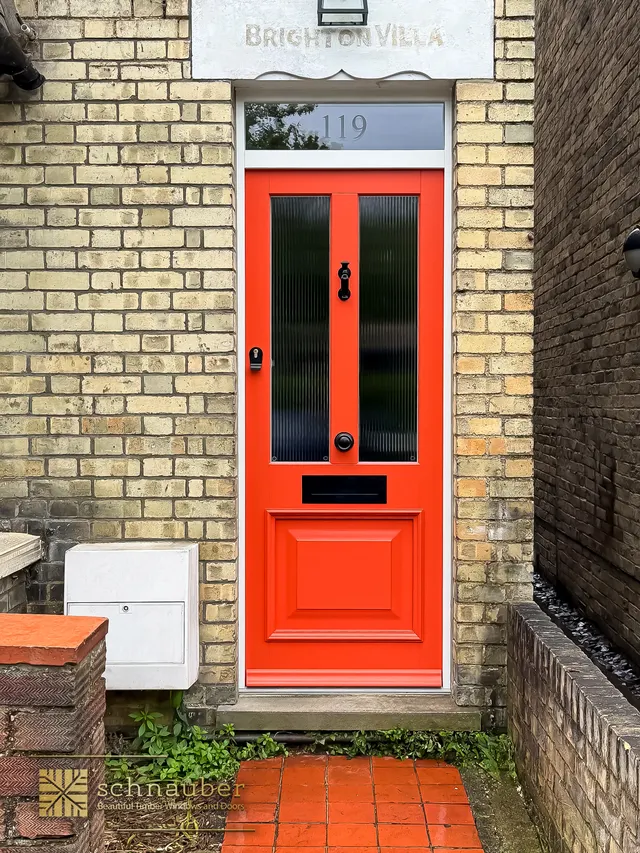
For example, one proposal might describe a complete doorset while another prices a leaf to reuse the old frame. These are not like-for-like offers even if the photographs look similar. Ask the second supplier to explain the retained frame’s condition and the scope of assessment. This is an illustrative comparison, not a claim about a past Schnauber installation.
Keep product claims separate from the agreed work. A brochure can introduce the range; the quotation should identify what you will actually receive. Where evidence is unavailable, ask the supplier to say so. Avoid filling that gap with assumptions about all timber doors, or with a promise that any door is burglar-proof.
How can you discuss a door project around Cambridge?
Schnauber’s head office is at 44 Mill Road, Cambridge. Our area pages include Cambridge, Ely and Saffron Walden. You can also compare our timber door options before deciding which opening arrangement to discuss.
Use the contact and quote form to request a free survey and no-obligation quotation. Send the property location, photographs of the door and frame, and any particular access or security concerns. Ask for the proposed doorset specification and relevant evidence with the quote, so your decision rests on what is being offered for your home.