Yes, timber sash windows can be double glazed. Slim double glazing or vacuum glazing fits within traditional-looking sashes, and fine glazing bars keep period sightlines. The glass is heavier than a single pane, so the balancing must suit it. In a listed building, ask your council first: consent is needed for work affecting its character.
What is a double glazed sash window?
A sash window has one or two sashes that slide up and down in a box frame. In a traditional window each sash holds a single pane, or several small panes divided by glazing bars. A double glazed sash keeps that sliding design but holds a sealed unit of two panes with a gap between them.
Our timber sash windows are made to measure, with traditional cords and weights or spring balances. Glazing choices include double glazing for thermal and acoustic performance, or vacuum glazing where frame depth is limited. This guide covers new timber sashes made with slim units. If you are deciding whether to repair or replace your existing windows first, read our sash window replacement guide.
How does slim double glazing fit in a timber sash?
Standard double glazed units are deeper than the thin glass a period sash was built for. Slim units are made thinner so they can sit in a sash section that still looks traditional. Vacuum glazing goes further: it is very thin, which helps where the frame depth is tight.
| Glazing choice | What it means for a sash |
|---|---|
| Single glazing | The original arrangement in most period sashes. Thin glass, light sashes and the most traditional look. |
| Slim double glazing | Two panes in a slim sealed unit. Chosen for thermal and acoustic performance within a traditional-looking sash. |
| Vacuum glazing | A very thin unit for slim profiles, useful where frame depth is limited. |
| Glazing bars | Fine bars can recreate the look of putty-glazed small panes over a larger unit. |
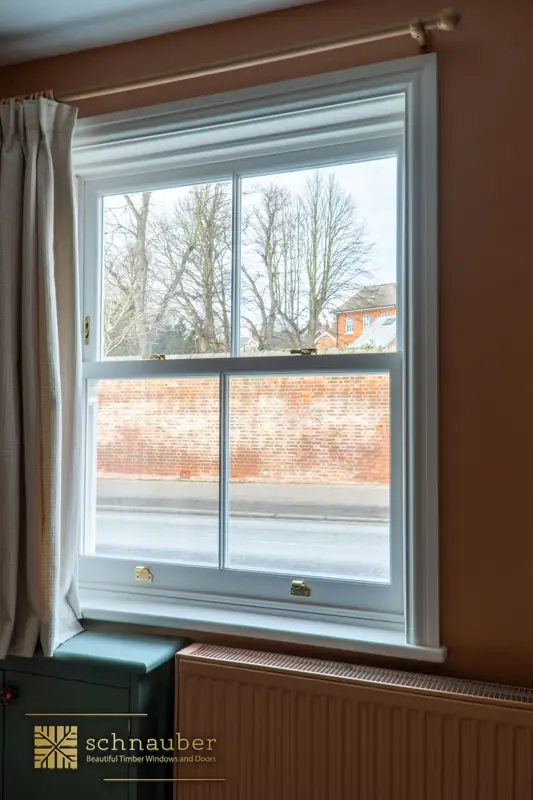
Which option suits your house depends on the existing frame dimensions, the look you want and the rules that apply to the building. Our heritage slimline windows range covers slim double glazing and vacuum glazing for period properties. The survey records the opening, the sash proportions and the existing details before any glazing is chosen.
What changes in the look of the window?
From the street, the main things people notice are the glazing bars, the thickness of the sash and the way the glass reflects light. Old glass often has a slight ripple. Modern glass is flat, so the reflection looks more even. Some owners do not mind this; for others it is the first thing they see.
- Glazing bars. Ask whether the bars will be true divided panes or fine bars over a single unit, and how they look from inside and out.
- Sash sections. Compare the width of the meeting rails and stiles with your existing windows. Slim profiles exist to keep these close to traditional sightlines.
- Spacer bar. A sealed unit has a spacer around its edge. Ask what colour it is and how much of it shows.
- Horns and mouldings. Sash horns, mouldings and period ironmongery should match the age and style of the house.
If you can, look at a sample or a finished window before you decide. Photographs of your existing sashes, taken straight on and close up, help the surveyor match the details.
What changes in weight?
Two panes weigh more than one. A double glazed sash is therefore heavier than a single glazed sash of the same size, and the balancing has to suit the finished sash. That is why the glass is not simply swapped while the old balancing is left as it was.
With cords and weights, the weights in the box frame are matched to the sash they carry. Spring balances do the same job without weights and allow slimmer frames with more glass. Both are offered on our timber sash windows. Ask which balancing your quote uses and why it suits the size of your sashes.
Do you need consent for double glazed sash windows?
It depends on the building. For an ordinary house that is not listed and not under an Article 4 Direction, the Planning Portal guidance on doors and windows explains that new windows of similar appearance usually do not need planning permission. It also notes that an Article 4 Direction can remove those rights, and leaseholders may need their landlord’s permission.
Greater Cambridge Shared Planning explains that in a conservation area you may need planning permission for some works that would otherwise not need it. Check with your council before you order. A product designed for conservation areas does not by itself mean a particular change is allowed.
Can you double glaze listed building windows?
Sometimes, but only with the right consent. Greater Cambridge Shared Planning explains that listed building consent is required for any work that affects the character of the building, and that carrying out unauthorised work to a listed building is a criminal offence. The whole building is listed, including its interior, so the windows are covered as well.
- Contact your local planning authority before choosing a product and ask whether the windows can be replaced or reglazed.
- Ask what drawings, details or samples they need to see with an application.
- Agree the specification, glazing type and glazing bar pattern that will go into the application.
- Wait for the decision before ordering. Include application time and any drawing work in your plans.
Our heritage slimline range is designed for Grade I and Grade II listed buildings, Article 4 areas and conservation areas, but a heritage product name does not establish consent. We cannot promise that a council will accept any particular window. What we can do is make the window to the detail your consent allows. Our guide to windows for period homes covers the wider choices for older houses.
Is double glazing worth it in a sash window?
Double glazing is offered in our sashes for improved thermal and acoustic performance, while keeping the look of a sash. How much difference it makes depends on the whole window and the room: the state of the old frames, how well the new sashes seal and where the house is. We do not quote a fixed saving, because it varies from house to house.
If you are also weighing up an extra pane, our double vs triple glazing guide explains that choice. In a sash, the frame depth can limit how thick the glass unit is, which is where slim double glazing and vacuum glazing come in.
How much do double glazed sash windows cost?
The survey sets the price. Size, the number of sashes, glazing bars, the glazing choice, balancing, timber, finish and fitting all change the total, and a listed building may need extra detail. We offer a free home survey and a no-obligation quotation for your measured openings, so you get a price for your windows rather than a guess. Our survey guide explains what happens on the day.
How do you get double glazed sash windows near Cambridge?
Schnauber’s head office is at 44 Mill Road, Cambridge. We have local pages for Cambridge, Ely, Saffron Walden and Bedford. You can also browse all our timber windows.
Use our contact and quote form to request a survey. Tell us the property location, how many sash windows you have, and whether the house is listed or in a conservation area. If you already have advice from your council, send that too.